

RELAXYL GEL®
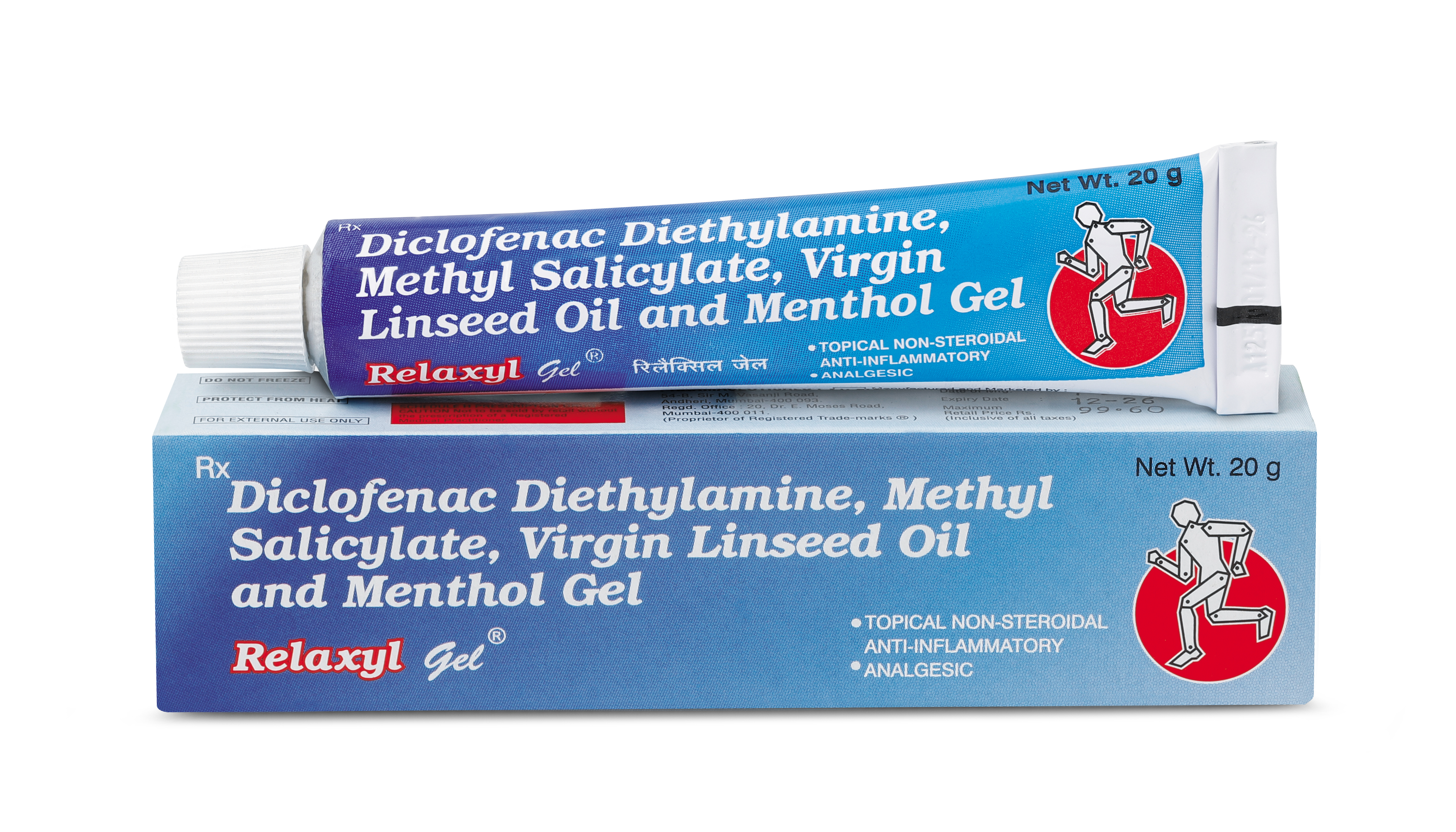
Composition:
- Diclofenac Diethylamine B. P. ...........................……. 1.16% w/w
- Equivalent to Diclofenac Sodium...................…….. 1.00% w/w
- Virgin Linseed Oil B. P. .......................................………….. 3.0% w/w
- Methyl Salicylate I.P. ..........................................………….. 10.0% w/w
- Menthol I.P. ......................................................…………………… 10.0% w/w
- Gel Base...........................................................…………………….. q.s.
Preservative:
- Chlorocresol I. P. ................................................……………… 0.2% w/w
Description
- Since oral medications over long-term use are known to cause potential systemic side effects, a topical anti-inflammatory agent (diclofenac) is always preferred in chronic conditions. The topical application of a gel formulation allows the penetration of active ingredients through the skin into the deepest layers, such as the subdermis, fascia, musculature, joint capsule, and synovial fluid. In tissues where vascularization is rather poor, such as tendons, it is an advantage that the active substance can directly reach the target, as opposed to systemic administration.
- The topical application of diclofenac achieves high therapeutic concentrations in the target areas without being immediately taken into the systemic circulation. This leads to a very low concentration in plasma and to a reduced possibility of systemic side effects. This is particularly important in the elderly, as they normally suffer from rheumatological disorders and are highly prone to adverse drug reactions, drug interactions, and compliance problems.
- Methyl salicylate in RELAXYL Gel® acts as a counter-irritant and gives relief when used for painful muscles and joints. Menthol acts as a cooling and soothing agent, and also offers analgesic effect when applied on the skin.
Virgin Linseed Oil is an emollient and has the advantage of lubricating and moisturizing the skin.
Indications
Traumatic inflammation of the tendons, ligaments, muscles and joints due to sprains and strains, localized form of soft tissue rheumatism and osteoarthritis.