Analgesics

Analgesics
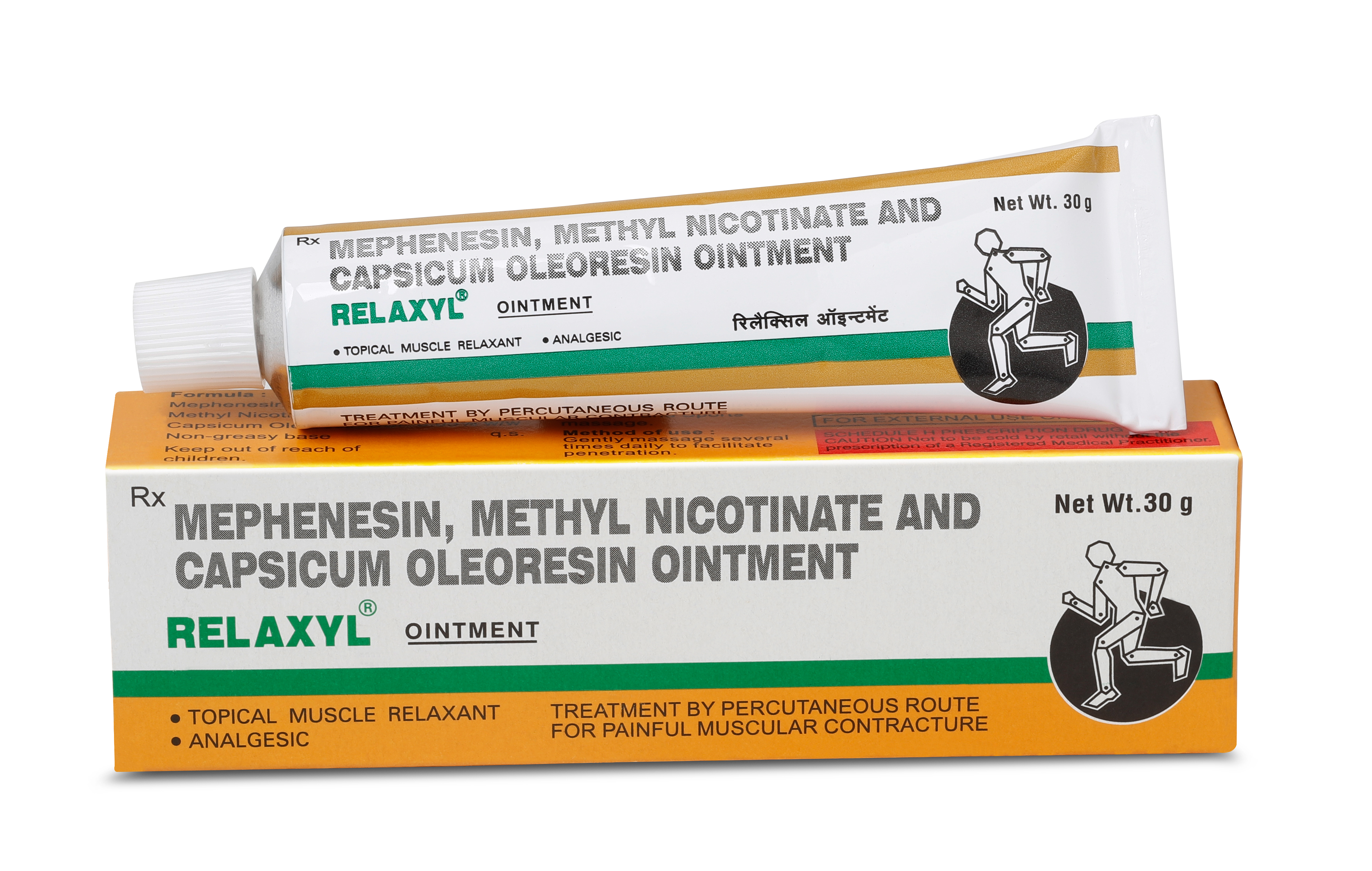
RELAXYL® Ointment
Composition:
- Mephenesin ....................................................…….. 10 % w/w
- Methyl Nicotinate B.P. ...............................……. 1.0 % w/w
- Capsicum Oleoresin U.S.P. ................……….. 0.05 % w/w
- Non-greasy base ........................................…….. q.s.
Description
- RELAXYL® Ointment is a time-tested topical muscle relaxant/analgesic having a unique formula. It contains Mephenesin, which when applied directly over the affected tissues, relieves inflammation by its direct muscle relaxation; analgesic action and local anaesthetic action.
- Capsicum Oleoresin is derived from hot chilli peppers from the genus Capsicum and has a long history of use in medical practice. It interacts with sensory afferents via vanilloid receptors VR1, which are cation channels from the transient receptor potential family. Chronic exposure to Capsicum Oleoresin stimulates and desensitizes these channels. Besides, capsicum depletes substance P, an endogenous neuropeptide involved in sensory perception and pain transmission and transiently decreases the density of nervous fibres on the skin. It is FDA-approved for the treatment of post-herpetic neuralgia and painful diabetic neuropathy.
- Methyl Nicotinate is a vasodilator and has topical analgesic properties. The topical pharmacotherapeutic approach has generally included hyperaemising topical drugs such as nicotinates with the intention to soften and relax the contracted muscle area, thereby indirectly alleviating the pain caused by this contraction. In addition to heat or hyperaemia, the treatment strategy has recently been augmented by a direct anti-inflammatory topical approach.
- Together, the combined effects of the preparation give relief in painful conditions of the joints and muscles.
Indications
- RELAXYL® Ointment is indicated in the symptomatic management of various painful conditions of muscles, tendons and joints such as spasms, sprains and strains, myalgias, myositis/contractures, cervical spondylitis, lumbago, frozen shoulder, arthritis, bursitis, tendonitis, sports injuries associated with muscle spasm and low back pain.